
Game Court Fencing: Ball Containment, Access, and Design
Game court fencing helps contain balls and organize access. Eric Meyer explains how your property, planned sports, and court layout shape the fencing plan.
Game court fencing can help contain balls, organize access, and define the space around play. However, its role depends on the property and the sports. A fence shown in one project photo should not automatically become the design for another site.
Eric Meyer helps clients plan fencing alongside the court layout, equipment, and nearby features. This applies to home courts, schools, churches, parks, and community sites. A useful plan starts with what the fence needs to do and how people will use the court.
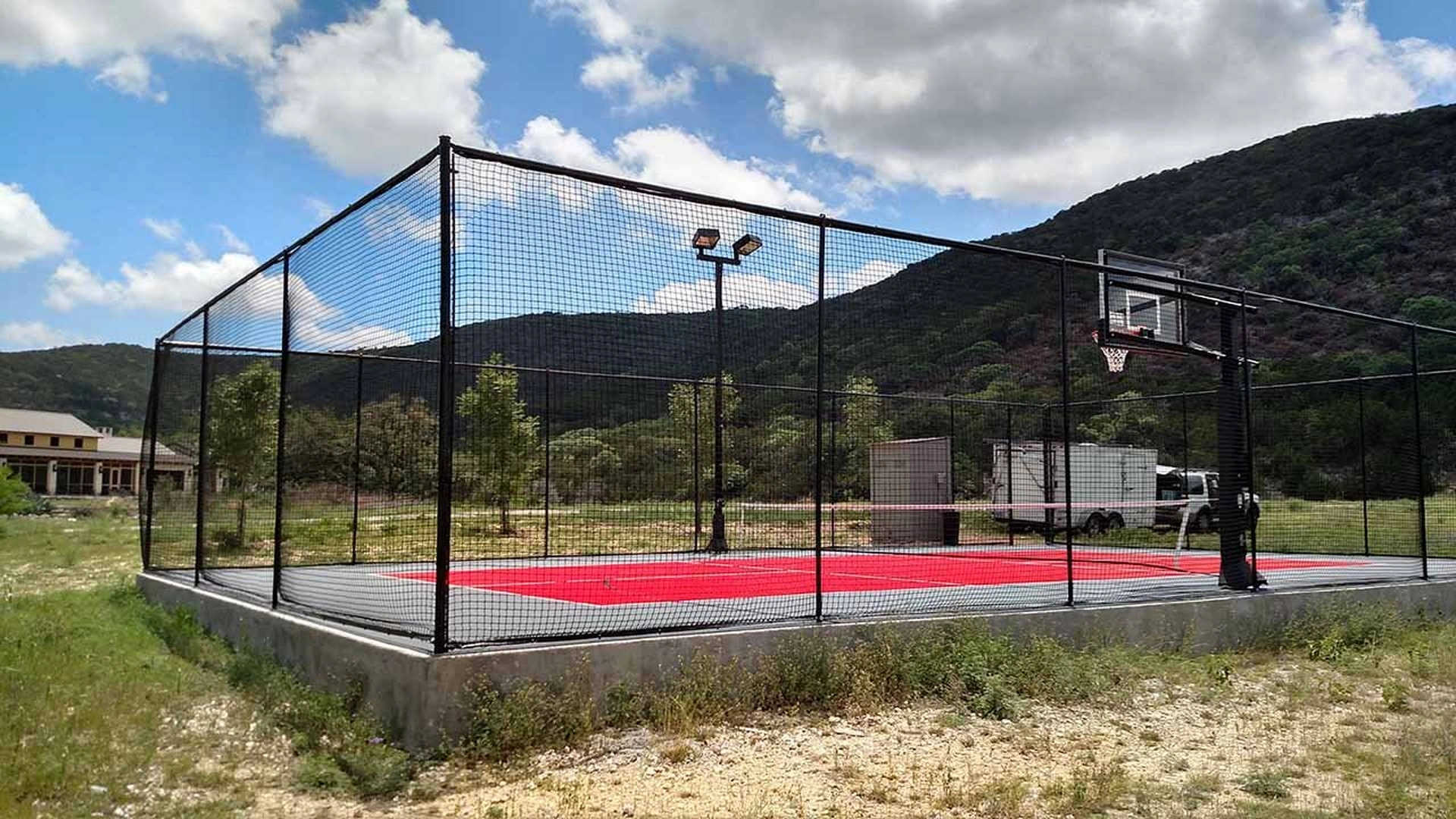
Ball Containment Is a Main Role of Game Court Fencing
First, think about where a missed shot or loose ball could travel. Nearby streets, neighboring properties, planting beds, slopes, and other activities can all affect the discussion. Fencing can reduce how often people leave the court to retrieve balls.
However, no fence height contains every possible shot. The sport, equipment placement, and site conditions affect the best layout. Therefore, discuss likely ball paths before choosing a height based on another court photo.
Netting and chain-link fencing offer different approaches to ball containment. Eric can explain the options in relation to the planned use. The goal is a plan that serves your court and property.
Ball containment means keeping loose balls within or near the playing area. It is one role of a court fence, alongside managing access and meeting other site needs.
Access Control and Security Are Different Questions
Gates can help organize entry and restrict access when the court is closed. However, a fence designed to contain balls does not automatically provide a secure boundary. Security depends on the complete fence and gate design, its latches and locks, and how people use it.
Tell Eric what you want access control to achieve. For example, you may want to close a private court between uses or manage entry to a shared facility. A wider property security concern may require a different solution from ordinary ball containment.
For public or shared sites, discuss access needs with the responsible project team. The court plan should account for players, staff, and maintenance access. Include gate locations early rather than treating them as last-minute additions.
Set the Fence Within the Complete Court Layout
The fence line should relate to the full activity area, not simply trace the painted boundaries. Players need room outside the game lines. Basketball goals, net posts, and other equipment also occupy space around the court.
Our game court dimensions guide explains the wider footprint. For pickleball rules, refer to USA Pickleball. Eric can use CAD drawings to show how the court and fixed features relate to one another. Your architect or builder can then coordinate those details with the overall site plan.
Also, consider paths, seating, nearby structures, and landscaping maintenance. Game court fencing should help define a useful space without creating awkward routes around it.
Choose Height and Material for the Site
A backyard with nearby landscaping may present different priorities from a public court beside another activity area. Likewise, basketball and pickleball can raise different containment questions. Start with those conditions before comparing fence materials.
Discuss appearance, durability, maintenance, and where you need to contain loose balls. The project team should also review the posts, supports, and foundations for the selected system. Choosing a material is only one part of planning the installed fence.
At some sites, different court edges may need different treatment. However, any changes in height or material should form part of a coordinated plan. Consider how each section will work with the complete game court fencing layout.
Windscreens and Privacy Need Early Attention
Depending on the product and layout, a windscreen may reduce wind exposure or provide some visual screening. However, adding one changes more than the view. It can also change the loads carried by the fence and its supports.
Therefore, mention windscreens or privacy screening before the fence design is settled. The responsible designer or supplier should review the system for the intended conditions. Do not assume that an existing fence can accept any screen without that review.
Also, consider sightlines around a shared space. Staff may want visibility into the court, while a homeowner may value privacy. Those goals can lead to different choices.
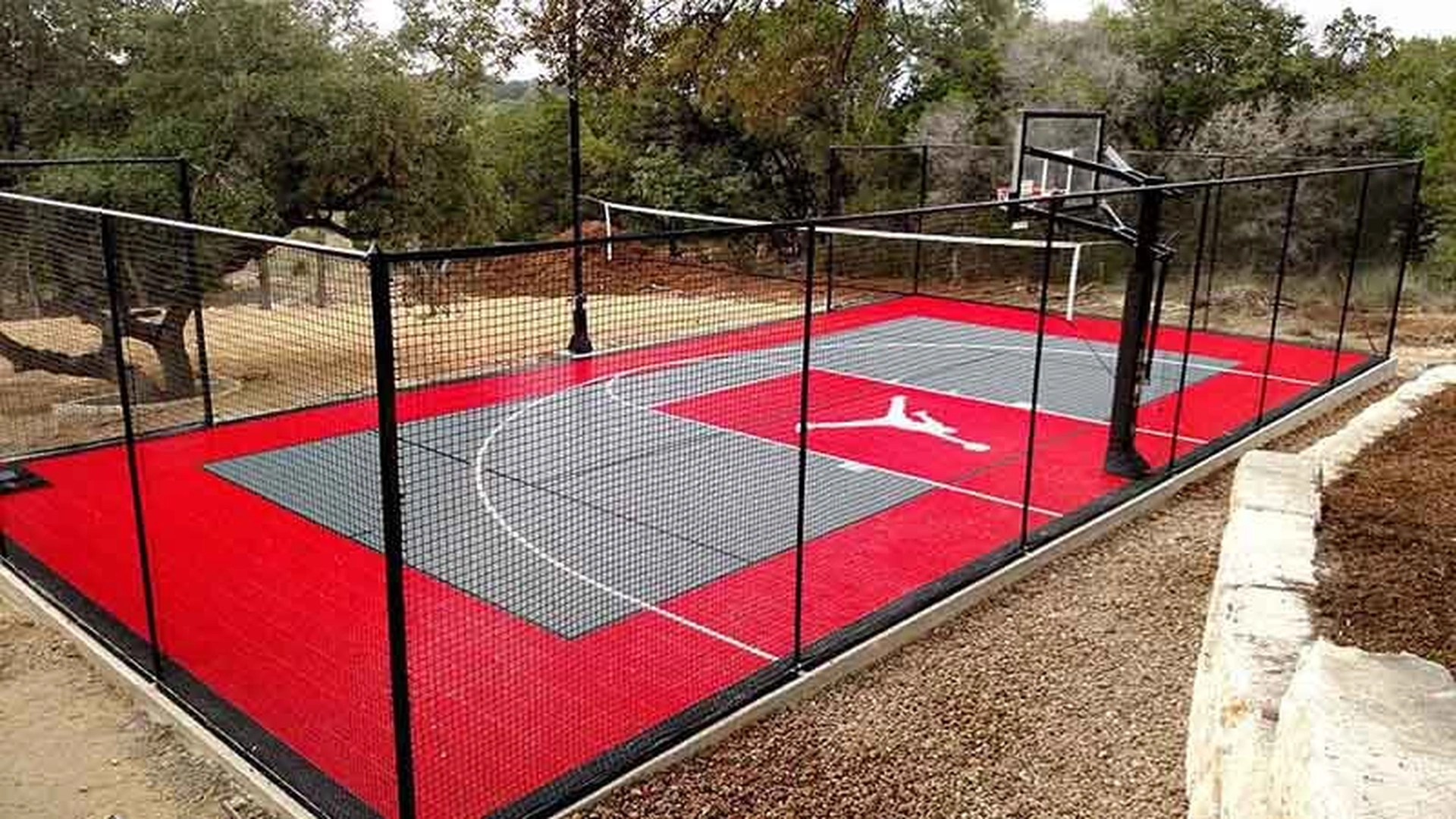
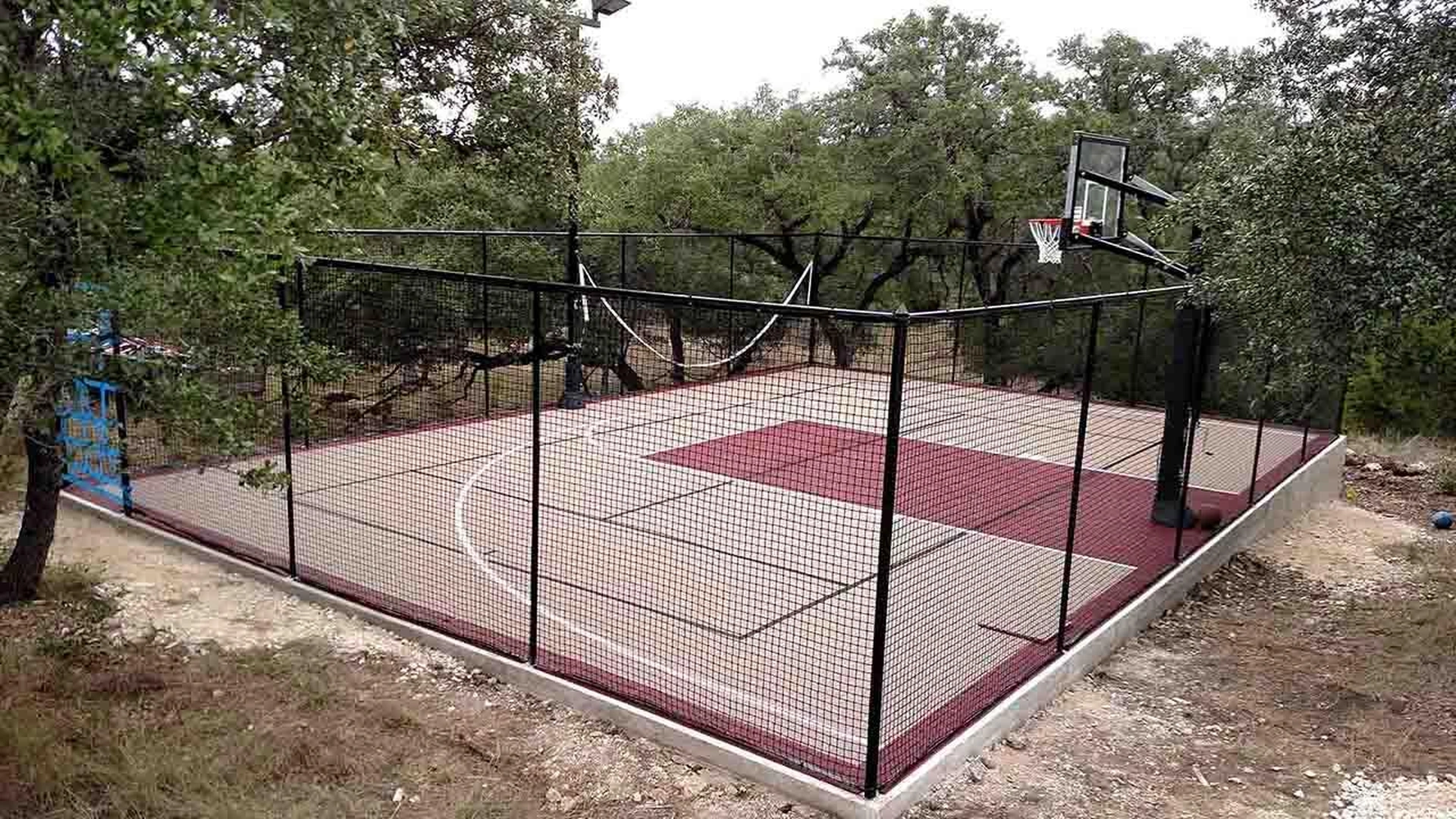
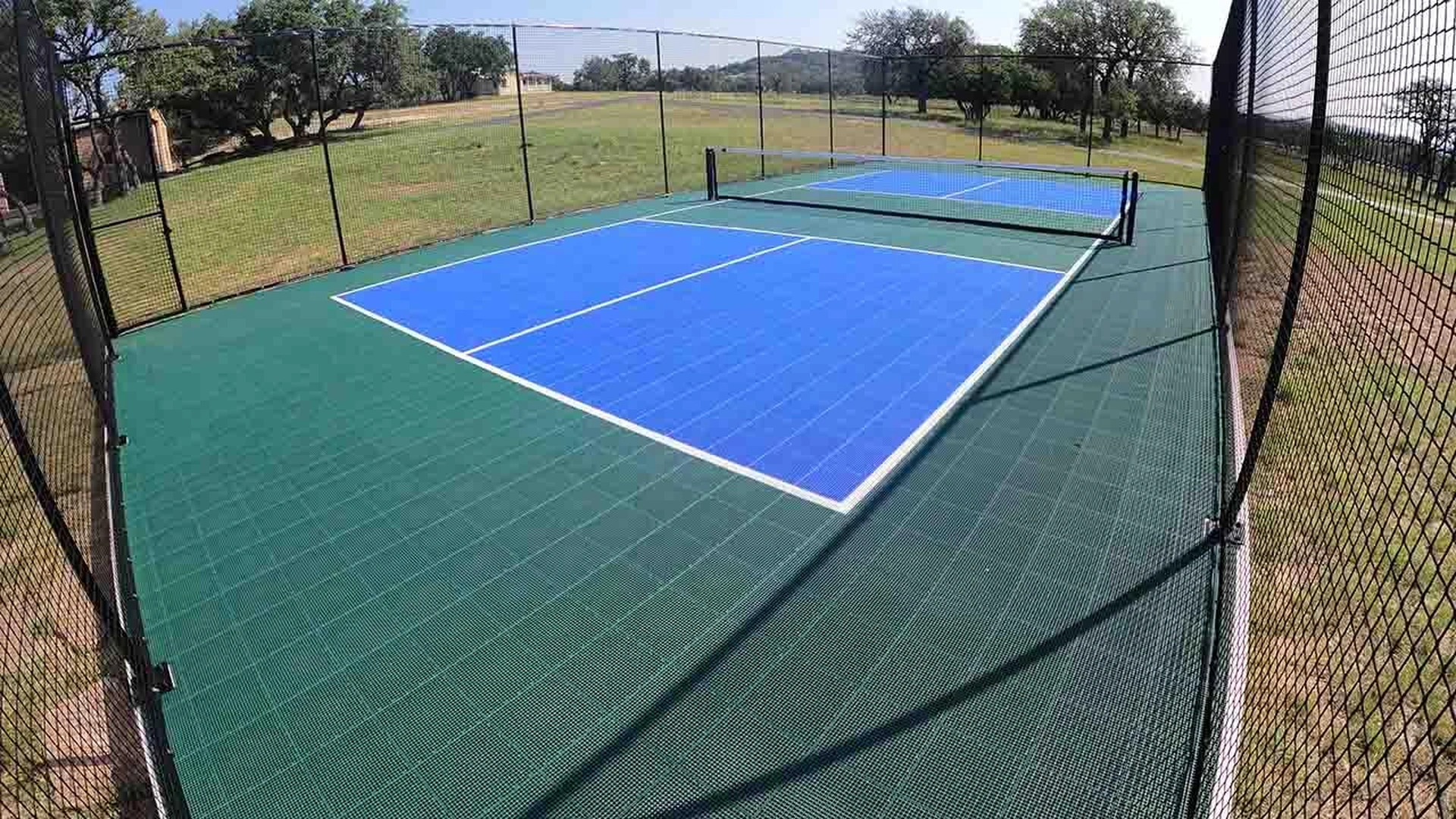
Gates, Equipment Movement, and Daily Use
Gate location affects how people enter and leave the court. It also affects access for cleaning tools, removable nets, and maintenance equipment. As a result, the gate plan should reflect daily court use.
Think about where people arrive from and where they wait. Then, review how the gate relates to the playing area and nearby paths. Discuss suitable gate widths, latches, locks, and access requirements with the responsible project team.
For shared sports, equipment changeover also matters. Our multi-sport court design guide explains how nets and other equipment connect with the layout. Game court fencing should support that routine rather than obstruct it.
What Affects Game Court Fencing Cost?
Fence length, height, material, gates, support details, and site access all affect price. Screening and other additions may also change the scope. Therefore, compare complete fence proposals rather than material prices alone.
In addition, plan fencing alongside lighting and the main court construction. Those elements may share access routes or occupy nearby areas. Our outdoor game court cost guide covers the broader budget, while the lighting guide explains related planning questions.
A photo of a court without fencing does not mean that arrangement suits every property. It shows one project at one point in time. Your own site deserves a separate discussion about containment, access, and nearby activities.
To prepare for that discussion, gather your property location, photos, and intended sports. Also, consider what you want the fence to achieve. Eric can help connect those priorities with the court plan and the right project team.